
How Ducted Air Conditioning Works in Saudi Arabia

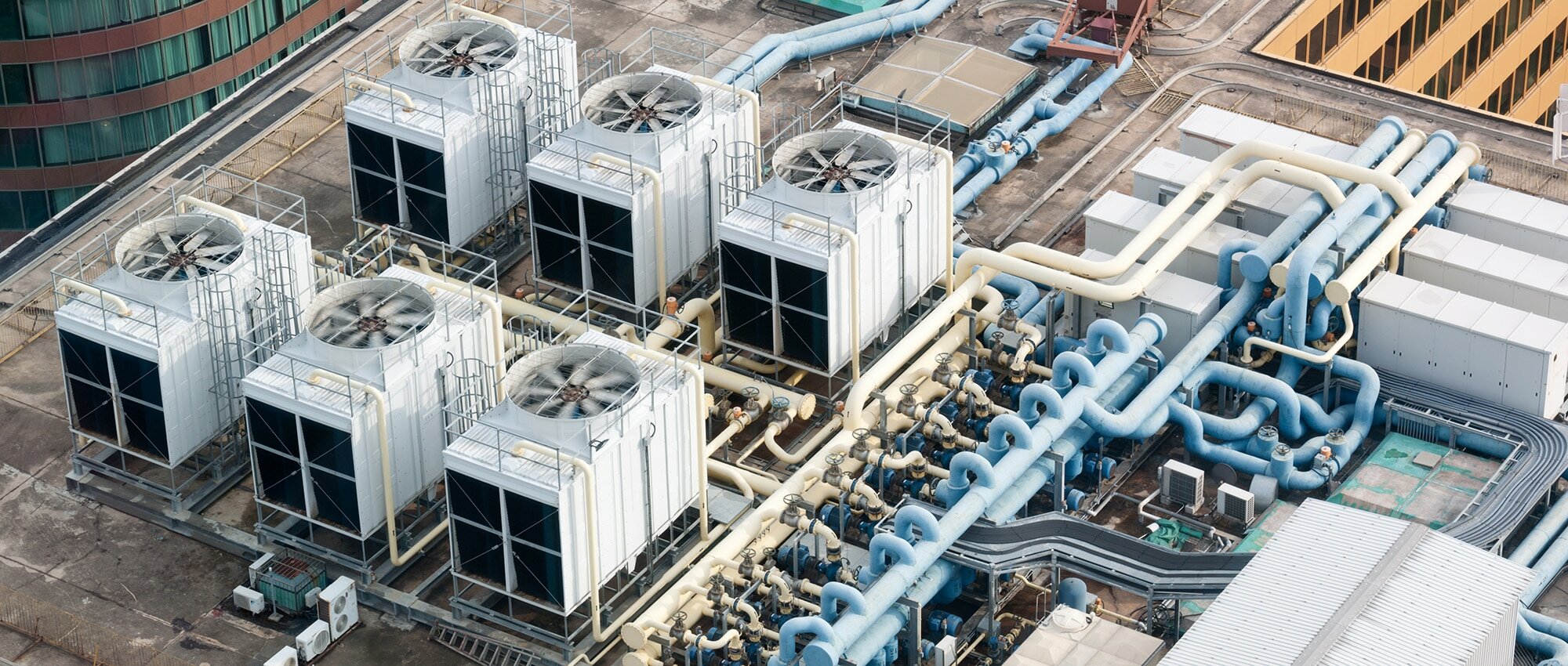
Most explanations of how ducted air conditioning works spend all their time on the compressor and barely mention the network of metal that actually delivers the comfort. That is where most of the real engineering lives. We fabricate that network every day, so this guide walks through how ducted air conditioning works from the machine room all the way to the vent above your desk, and why the duct itself decides whether the system performs. By understanding how ducted air conditioning works, building owners can make better decisions about system design, energy efficiency, and long-term HVAC performance.
The Basic Cycle Behind How Ducted Air Conditioning Works
At its core, how ducted air conditioning works comes down to moving heat rather than creating cold. A refrigerant absorbs warmth from indoor air, carries it outside, and releases it into the atmosphere.
Warm air from inside the building passes over a cold evaporator coil, giving up its heat to the refrigerant circulating through it. The air leaves the coil noticeably cooler than it arrived.
That cooled air does not simply drift into the room. It gets pushed by a blower fan into a network of ducts that carries it to every zone the system is designed to serve.
Outside the building, the same refrigerant reaches the condenser unit, where a fan blows ambient air across hot coils to release the heat it collected indoors, completing the cycle before the refrigerant returns to start again.
Inside the Air Handling Unit: Where Cooling Actually Happens
Understanding how ducted air conditioning works means starting with the air handling unit, the indoor half of the story. It houses the evaporator coil, the blower fan, and in most commercial installations, filtration stages that clean the air before it ever reaches a duct.
In large Saudi commercial buildings, the air handler is usually chiller-fed rather than a direct expansion unit.
This means it circulates chilled water through the coil instead of sending refrigerant directly through the indoor unit.
Either way, the fan inside this unit is what actually moves air through the entire building. Its size and speed are calculated against the total duct length, the number of branches, and the pressure the system needs to overcome.
Undersize that fan relative to the ductwork and the far end of a building never quite reaches temperature. Oversize it and the system becomes noisy and wastes energy pushing more air than the space needs.
Filtration stages inside the handler also affect how the whole system runs. A clogged filter restricts airflow the same way an undersized duct does, and both problems get blamed on the compressor far too often.
The Duct Network
This is where how ducted air conditioning works actually gets decided. The duct carries conditioned air from the handler to every room, and its condition determines how much of that cooling survives the trip.This explains why how ducted air conditioning works is closely connected to duct design, fabrication quality, and airflow control.
A well-sealed, properly sized duct delivers air at close to the temperature it left the coil. A leaking or undersized one loses cooling capacity along the way, forcing the system to run longer to reach the same setpoint.
Rectangular galvanized duct remains the standard in Saudi commercial buildings because it fits neatly into suspended ceilings.
Spiral and round sections are more common in exposed industrial designs, where their shape helps reduce pressure loss efficiently.
Pre-insulated duct changes this equation by combining structure and insulation in a single panel, which keeps supply air closer to its target temperature even when it travels through hot ceiling voids above a Saudi summer.
Every joint, elbow, and flange in that network is a place air can either flow smoothly or leak away, which is exactly why fabrication quality matters as much as the mechanical equipment driving the system.
Send us your building layout, and our team will confirm the duct design that keeps your system running the way it was designed to.
Return Air and Zoning
Supply air is only half of how ducted air conditioning works. Return grilles pull air back from occupied spaces into the system, where it gets filtered and cooled again.
Without an adequately sized return path, the system starves for air, pressure builds unevenly across rooms, and the whole network works harder than it should to move the same volume of conditioned air.
Zoning adds another layer of control. Motorized dampers inside the ductwork open and close in sections, letting different areas of a building reach different temperatures from a single central system.
Hotels, offices, and hospitals rely heavily on zoning, since an empty conference room and a full lobby rarely need identical cooling at the same time of day.
The return path and the zoning dampers both live inside the same duct network, which is another reason fabrication quality carries so much weight in how ducted air conditioning works day to day.
Why Duct Quality Determines How Well a Ducted System Actually Performs
A high-efficiency chiller connected to poorly built duct will still underperform. Energy that should reach the room gets lost through leaking seams and thin, flexing sheet metal along the way.
Sharp ninety-degree turns inside a duct create pockets of stagnant airflow where dust and moisture collect, which quietly undermines both indoor air quality and cooling efficiency over time.
Correct static pressure design matters just as much. Air moving too fast through undersized duct creates noise complaints, while air moving too slowly wastes the capacity the equipment was purchased to deliver.
At Al Samman, we fabricate to SMACNA construction standards and Saudi Building Code pressure classes specifically because this is the layer of the system most contractors underestimate until it fails.
Ask any experienced facilities manager how ducted air conditioning works in practice, not on paper, and they will usually point straight to the ductwork as the part that made the biggest difference to comfort and running cost.
Key Factors That Affect Ducted Air Conditioning Performance
A ducted system depends on more than the cooling equipment itself. Several design and installation factors determine whether conditioned air reaches each space efficiently:
- Correct duct sizing: Ensures airflow reaches every zone without excessive pressure loss.
- Proper insulation: Reduces heat gain as cooled air travels through ceilings and service areas.
- Duct sealing quality: Prevents air leakage through joints, connections, and poorly sealed sections.
- Static pressure calculation: Maintains the right balance between airflow performance and operating noise.
- Regular filter maintenance: Protects airflow capacity and prevents unnecessary strain on the system.
Ducted vs Split: Why Commercial Buildings in Saudi Arabia Choose Ducted Systems
A split system needs one visible indoor unit per room, which works for a small office but becomes impractical fast across a mall, hotel, or hospital with hundreds of zones.
Ducted air conditioning consolidates that equipment into one or a few central units, hiding the ductwork inside ceilings and delivering conditioned air through vents instead of wall-mounted boxes throughout the building.
That consolidation also simplifies maintenance. Technicians service a handful of central units and accessible duct sections instead of dozens of individual indoor units scattered across a facility.
For large Saudi projects facing extreme summer loads, this centralized approach is usually the more practical and more energy-efficient path once the building crosses a certain size.
It also comes down to how ducted air conditioning works with the building itself rather than against it, creating a system that supports comfort, efficiency, and architectural requirements.
Ceilings hide the equipment, corridors stay free of wall-mounted units, and the architecture keeps its intended finish.
Ducted Air Conditioning vs Split Systems: Key Differences
| Feature | Ducted Air Conditioning | Split Air Conditioning |
| Best application | Hotels, hospitals, offices, malls, and large commercial buildings | Small offices, apartments, and individual rooms |
| Air distribution | Conditioned air moves through a hidden duct network and ceiling vents | Each room requires a separate indoor unit |
| Appearance | Keeps interiors clean with concealed equipment | Indoor units remain visible on walls or ceilings |
| Maintenance | Centralized maintenance for main units and duct sections | Multiple units require separate servicing |
| Energy efficiency | More efficient for large buildings with proper design | Practical for smaller spaces with limited cooling needs |
Common Signs Something Is Wrong With How Your Ducted System Works
When a ducted air conditioning system starts underperforming, the problem is not always with the cooling equipment itself. In many commercial buildings, issues with airflow, insulation, duct sizing, or installation quality are the real causes. Watch for these common warning signs:
- Uneven temperatures between rooms: If some areas feel warmer or cooler than others, the issue may be incorrect duct sizing, poor air distribution, or duct leakage rather than a problem with the chiller or compressor.
- Whistling or rattling sounds: Unusual noises from the ceiling void can indicate high air velocity through undersized ducts or loose duct joints that need inspection.
- Higher electricity bills: Increased energy consumption without changes in occupancy or weather may result from air leakage, forcing the system to operate longer to maintain the required temperature.
- Condensation around duct areas: Water marks or condensation on ceiling tiles near duct runs usually indicate insufficient insulation. Pre-insulated duct systems help prevent these issues by maintaining proper thermal performance.
If you notice any of these signs, consulting HVAC engineers for a duct inspection can help identify the actual cause before replacing expensive equipment unnecessarily.
For commercial projects, knowing how ducted air conditioning works helps engineers and facility managers identify the right approach for cooling distribution, maintenance, and future performance.
Understanding how ducted air conditioning works comes down to one point most people miss. The equipment cools the air, but the duct decides how much of that cooling actually reaches the room.
Al Samman has fabricated duct for commercial and industrial projects across Saudi Arabia since 1973, built to SMACNA and Saudi Building Code standards. Send us your layout and let our engineers review it.
Get Expert Ductwork Support for Your Saudi HVAC Project
Choosing the right duct design and fabrication partner can make a measurable difference in system performance, energy efficiency, and long-term reliability. Al Samman provides commercial and industrial ductwork solutions manufactured to meet SMACNA and Saudi Building Code standards, backed by more than 50 years of experience.
Share your building layout with Al Samman’s engineering team and get professional guidance on duct design, fabrication, and performance requirements.
Frequently Asked Questions
How does ducted air conditioning work compared to a split system?
Ducted air conditioning uses central cooling equipment connected to a hidden duct network that distributes air through ceiling vents. Unlike split systems that require separate indoor units for each room, ducted systems provide centralized control and are better suited for large commercial buildings.
Why does duct quality affect how well a ducted system performs?
Duct quality directly affects airflow efficiency, comfort, and energy consumption. Poor sealing, incorrect sizing, or weak insulation allows cooled air to escape before reaching occupied spaces. Properly fabricated ductwork helps maintain airflow performance and allows the HVAC system to operate closer to its designed efficiency.
What role does the return air path play in a ducted system?
The return air path collects air from occupied spaces and sends it back to the air handling unit for filtering and cooling. If the return system is undersized or poorly designed, airflow becomes restricted, pressure balance is affected, and the entire system may lose efficiency.
Can zoning be added to an existing ducted air conditioning system?
Yes, zoning can often be added by installing motorized dampers and control systems within existing ductwork. However, the current duct layout, airflow capacity, and system design must be reviewed first to ensure the modifications provide balanced cooling across different zones.
Why is pre-insulated duct recommended for Saudi commercial buildings?
It combines structure and insulation in one panel, which limits heat gain as air travels through hot ceiling voids and keeps supply air closer to its intended temperature.
Does Al Samman help diagnose poor performance in an existing ducted system?
Yes, our team can review duct layout, sizing, and sealing to identify whether performance issues trace back to the ductwork rather than the mechanical equipment.
Is duct design part of how ducted air conditioning works, or just installation?
Duct design is a critical part of how ducted air conditioning works. Airflow calculations, duct sizing, routing, and material selection are decided before fabrication. These early engineering decisions determine system efficiency, noise levels, and whether conditioned air reaches every area as intended throughout the building’s lifetime.