
Types of Dampers in HVAC: A Complete Guide to Uses, Control, and Selection

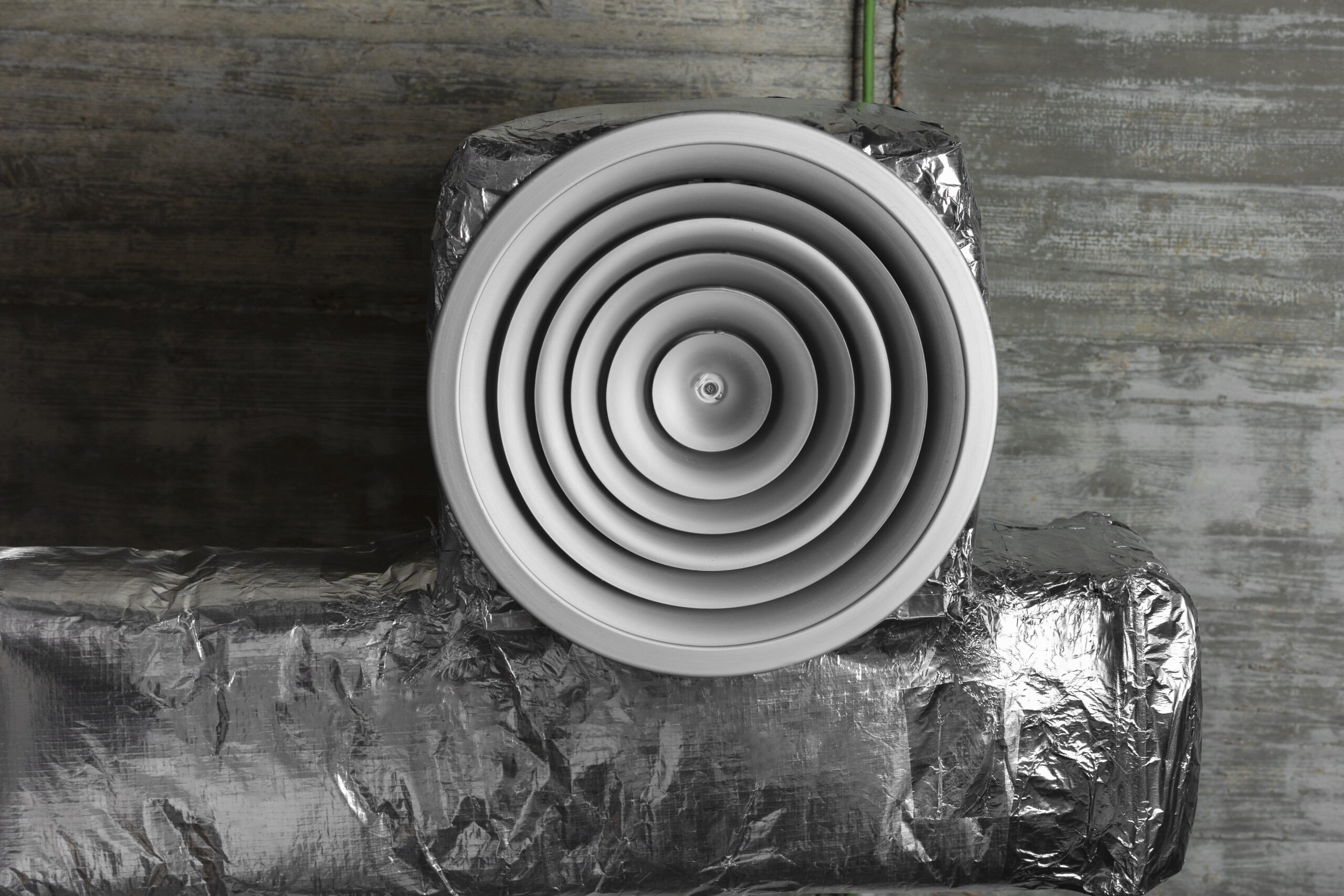
HVAC dampers control how air moves through ducts, zones, and ventilation systems. Different applications require different damper designs, from simple volume control to motorized, backdraft, and fire and smoke dampers. Understanding the types of dampers in HVAC helps engineers and contractors select the right unit based on airflow, pressure, control, duct layout, and life safety requirements.
Types of Dampers in HVAC: What a Damper Actually Does
A damper is a movable blade assembly inside a duct or opening. It opens, closes, or partly closes to control air movement.
The types of dampers in HVAC fall into two broad families. Control dampers manage comfort and airflow, while life safety dampers protect people during a fire.
Some are manual, some motorized, and some fully automatic. The right choice among the types of dampers in HVAC depends on the job, the building, and the code.
Types of Dampers in HVAC Systems by Function
Volume control dampers are the simplest. A hand quadrant sets the blade angle, and the installer locks it after balancing the system.
Motorized dampers use an actuator instead of a hand lever. They respond to a thermostat, a sensor or the building management system.
Backdraft dampers work like check valves. Airflow opens the blades, and gravity closes them when the fan stops, which prevents reverse flow.
Fire dampers close when heat melts a link. Smoke dampers close on a signal from a detector or the fire alarm panel.
Combination fire/smoke dampers do both jobs and carry both listings. Pressure relief dampers open at a set pressure to protect ducts and rooms from overpressure.
Splitter and mixing dampers direct or blend airflow between ducts. Louver dampers sit at outside air intakes and exhausts.
These are the core types of dampers in HVAC systems, and most projects use at least four of them.
Different Types of Dampers by Blade Design
Different types of dampers also vary by blade layout. The layout changes how the damper controls air and how much pressure it wastes.
Parallel blade dampers rotate all blades in the same direction. They redirect flow and give strong control near the closed position.
Opposed blade dampers rotate neighboring blades in opposite directions. They give steadier proportional control over the full range and suit modulating service.
Single-blade butterfly dampers suit round ducts and small branches. They are cheap, but they offer limited control at high velocity.
Airfoil blades cut noise and pressure drop compared with flat blades. That matters in large air handling systems.
Blade layout is the second way to sort the types of dampers in HVAC, after function.
Need help matching a damper type to your duct layout? Send your drawings to Samman Duct for a technical review.
Types of Dampers in Buildings: Where Each One Belongs
Homes mostly use manual volume dampers to balance branches and simple backdraft dampers on exhaust fans. Cost and simplicity drive the choice.
Offices and retail buildings use motorized control dampers with zoning, plus fire dampers at rated walls. Air quality and energy use drive the choice.
Hospitals and hotels need fire/smoke dampers at corridor barriers, because smoke control protects people who cannot leave quickly.
Malls and large halls add smoke extraction dampers for engineered smoke control. Factories favor robust volume dampers and backdraft units on exhaust systems.
The types of dampers in buildings change with occupancy, so review each zone before a single order goes out. A hotel tower and a warehouse will never share one damper schedule.
HVAC Damper Control: Manual, Motorized and Automated
HVAC damper control starts with the simplest method, a locking hand quadrant. It works for one time balancing but cannot react to changing loads.
Motorized control adds an electric actuator, either two-position or modulating. Two position units are fully open or closed, while modulating units stop at any angle.
Actuators take signals from a thermostat, a static pressure sensor, a CO₂ sensor, or the building management system. The controller decides how far each blade moves.
Good HVAC damper control also includes end switches for status feedback. The controller then knows whether the blades really reached the commanded position.
Life safety dampers add another rule. Fire and smoke signals must override every comfort command.
Of all the types of dampers in HVAC, life safety units are the only ones whose control logic is dictated by the fire code.
What Is an HVAC Fire Damper, and What Are the Two Main Types?
An HVAC fire damper is a passive device fitted in a duct where it crosses a fire-rated wall or floor. It closes automatically to keep fire from spreading between compartments.
The two main types of fire dampers are static and dynamic. Static dampers suit systems where the fan shuts down in a fire, and they close by gravity or springs.
Dynamic dampers are tested to close against moving air. They suit systems where the fan may keep running during the fire.
Both usually rely on a fusible link, typically rated near 165°F (74°C). Motorized versions add an actuator for remote closing and testing.
Fire dampers sit inside the life safety group of the types of dampers in HVAC, and they need their own listing.
Types of Dampers in Vibration: A Different Kind of Damping
The phrase “types of dampers in vibration” describes something else entirely. These devices absorb energy to stop machinery and structures from shaking.
Viscous dampers use fluid resistance, friction dampers use sliding surfaces, and tuned mass dampers use a counterweight that moves out of phase. Elastomeric dampers use rubber-like materials.
In HVAC, the vibration side shows up around fans, chillers, and pumps. Spring isolators, neoprene pads and flexible duct connectors keep noise from reaching the structure.
Unlike the types of dampers in HVAC that move air, vibration dampers never touch airflow, so never confuse them with air dampers. Both may appear on the same equipment schedule, but they solve different problems.
Types of Dampers in HVAC by Actuation and Fail Position
Actuation is another useful lens. It separates the types of dampers in HVAC by how they move and what they do when power is lost.
Direct-coupled actuators mount straight on the damper shaft. They are compact and common on modulating units in commercial buildings.
Spring return actuators drive the blades to a fail position when power drops. Fail closed suits outside air dampers, while fail open suits smoke extraction.
Pneumatic actuators still exist in older plants with compressed air. Most new projects use electric actuators at 24 V or line voltage.
Choose the fail position from the safety and comfort needs of each zone.
Types of Dampers in HVAC by Duct Shape and Application
Rectangular ducts take multi-blade dampers. Round ducts take butterfly or round iris-style units, and oval ducts need units made to suit.
Duct shape changes the pressure drop and the leakage. Using a rectangular damper with transitions in a round duct adds losses and leak points.
Outdoor air intakes need louver dampers with weather blades and often insulation for cold or hot climates. Exhaust points need backdraft protection.
Kitchen and industrial exhaust have special rules. Grease and high-temperature ducts follow their own standards, and general-purpose dampers must not be used there.
Testing and Maintenance for Every Damper Type
Every one of the types of dampers in HVAC moves rarely, so it can seize quietly. Schedule a visual and functional check at least once a year.
Cycle each motorized unit from the controller. Confirm that the blades move fully and that the feedback signal matches the real position.
Lubricate linkages where the maker allows it, clean the blades, and inspect seals. Replace worn parts with the listed component.
For life safety units, test at the interval set by your fire code. Keep a log of each damper location, date, and result.
Cost and Service Life Factors
Cost varies widely across the types of dampers in HVAC, and price rises with function. A manual volume damper costs the least, a motorized control damper costs more, and listed fire and smoke units cost the most.
A cheap damper with poor seals wastes energy every day it runs.
Quality frames and blades last for decades in dry indoor air. Actuators usually need replacement sooner, so choose models with widely available spares.
Materials, Leakage, and Pressure Drop
Materials differ little across the types of dampers in HVAC. Galvanized steel is the standard frame and blade material for most interiors. Aluminum suits lighter duty, and stainless steel suits humid or corrosive spaces.
Blade seals decide how tightly a damper closes. Control dampers list a leakage class, while smoke dampers must meet UL 555S Class I or II.
Pressure drop matters because every damper adds resistance. A poorly chosen unit forces the fan to work harder for the life of the building.
Ask for the airflow and pressure performance data before ordering. Do not rely on duct size alone.
How to Choose Among the Different Types of Dampers
Start with the function. Ask whether the damper balances, modulates, prevents backflow, or protects against fire and smoke.
Then check the location. A damper at a fire-rated wall needs a listed fire or combination unit, not a control damper.
Next, define the operating conditions: airflow, pressure, temperature, and duct shape. These decide the blade type and the actuator.
Use these steps to narrow the types of dampers in HVAC down to one model per location.
Finally, plan control and access. Confirm signals, voltage, and feedback, and leave an access door near each damper for testing and service.
Damper Mistakes That Cause Problems Later
The most common mistake among all types of dampers in HVAC is using a control damper where a fire-rated device is required. The wall is rated, but the damper is not.
Second is oversizing. A very large modulating damper barely moves the airflow across most of its stroke, and control becomes unstable.
Third is poor access. A damper hidden above a fixed ceiling cannot be tested, reset, or repaired.
Fourth is skipping commissioning. Every actuator should be cycled and its feedback confirmed before handover.
How Samman Duct Fits Into Your Damper Project
Getting the types of dampers in HVAC right starts with the duct around them. Samman Duct manufactures HVAC duct, pre-insulated ducts, and air outlets in Saudi Arabia under ISO 9001:2015 quality control.
Our team has supported projects such as Hilton Double Tree, Holiday Inn Riyadh, Alothaim Mall and Hai Al Jamaa Hospital. Correct duct sizing and connection details make every damper install cleaner.
Planning a hotel, mall, or hospital? Talk to Samman Duct before finalizing duct routes and damper locations.
FAQs
What are the two types of dampers?
The two broad types of dampers in HVAC are control dampers and life safety dampers. Control dampers balance or modulate airflow. Life safety dampers, which include fire, smoke and combination units, protect people during a fire.
How do I know if my HVAC damper is open or closed?
Check the position indicator or the hand quadrant. A handle parallel to the duct usually means open, and perpendicular means closed. Motorized units show status on the actuator or controller.
What is a HVAC fire damper?
A HVAC fire damper is a passive device in a duct at a fire rated barrier. It closes on heat, usually through a fusible link, and stops fire from spreading between compartments.
What are the two main types of fire dampers?
The two main types of fire dampers are static and dynamic. Static units close when the fan is off and suit systems that shut down in a fire. Dynamic units can close against moving air.
Choose the Right Damper for Your HVAC System
Selecting the right damper helps maintain proper airflow, control and system performance. For ductwork and damper requirements, contact Samman Duct for technical support and project guidance.